
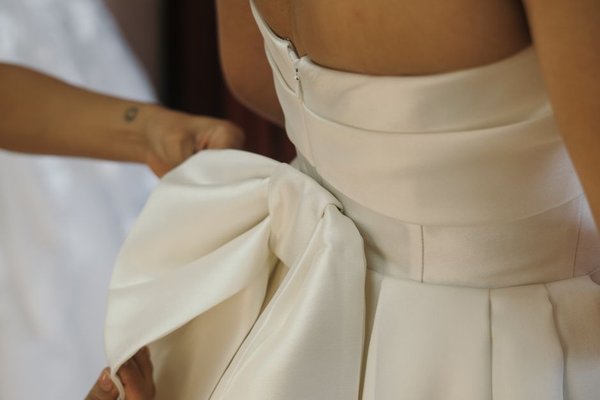
Satin bridesmaid dresses look effortlessly polished in photographs, but the same glossy surface that makes them appealing can reveal every crease, seam, and change in fit. Two dresses in the same colour may behave differently if one uses lightweight satin and the other has a firmer weave. Before choosing a style, consider how the fabric moves, how it feels against the skin, and what a full wedding day will demand.
Understand What Satin Actually Means
Satin describes a weave, not a single fibre. It can be made from silk, polyester, acetate, or blended yarns. The smooth face reflects light, while the reverse is often duller. This distinction matters because a label that simply says “satin” does not tell you whether a dress will breathe, stretch, resist wrinkles, or tolerate moisture.
Among bridesmaid dress fabrics, satin is particularly sensitive to construction. A lined, well-cut gown may skim the body beautifully; a thin, unlined version can cling or show underwear edges. Check both fibre content and lining before ordering.
Choose the Right Weight and Finish
Lightweight Versus Structured Satin
Lightweight satin creates fluid skirts and soft draping, making it attractive for slip dresses and gathered necklines. However, it may cling around the hips and crease during travel. Heavier satin, including some duchess-style varieties, holds shape better for pleated skirts and fitted bodices but can feel warmer and less flexible.
Request a swatch whenever possible. Hold it against daylight, fold it gently, then release it. Notice whether it springs back, retains sharp creases, or becomes transparent over a contrasting background. A swatch cannot predict the entire dress, but it helps rule out surprises.
High Shine, Soft Sheen, and Colour
Glossy satin reflects directional light, so pale champagne or silver can appear brighter under flash photography than in natural daylight. A softer, more muted finish often looks understated and may disguise minor ripples. Dark colours can appear especially rich, though they still reveal pressure marks and lint.
Find a Cut That Works With the Fabric
Satin dress fit depends on more than the size chart. Unlike forgiving knitted fabrics, many woven satins offer little stretch unless elastane is included. A dress that fits while standing still may pull across the hips when sitting or strain at the bust when arms are raised.
Bias-cut satin bridesmaid gowns drape diagonally and follow body curves, but they can emphasise underwear lines and sometimes change length as the fabric settles. A-line shapes create more room through the hips. Wrap-inspired bodices allow visual definition at the waist, although a fixed wrap may not actually be adjustable.
When trying on a dress, sit down, walk, raise your arms, and take a few dance steps. Check the side seams and zip for tension. A comfortable fit with gentle ease usually looks better than sizing down to achieve a sleek photograph.
Match Satin to the Season and Setting
For a summer garden ceremony, lightweight satin may feel less bulky, but a breathable lining and the actual fibre composition are just as important. Polyester satin can trap heat even when it feels cool initially. Outdoor locations also introduce grass, damp ground, and possible water spotting.
For autumn or winter weddings, structured satin pairs well with formal venues and fuller silhouettes. Consider the room temperature rather than relying only on the season. Floor-length hems may need bustle options or careful tailoring if the reception involves stairs and dancing.
When comparing formal looks, a guide to bridesmaid dress silhouettes can help narrow the cut before the fabric choice becomes overwhelming.
Plan Undergarments Before Alterations
Smooth satin can show bra seams, waistband edges, and contrasting colours. Try the dress with the exact underwear and shapewear intended for the wedding. Seamless styles close to the wearer’s skin tone often work better than bright white under light satin, but test under strong lighting rather than assuming they will disappear.
A backless or low-cut gown might require professionally fitted adhesive support or sewn-in cups. Neither option works equally well for everyone. If support is essential, choose a neckline that accommodates a dependable bra instead of building the entire outfit around a difficult workaround.
Bring wedding shoes and undergarments to the alteration appointment. A tailor can adjust straps, waist placement, bust shaping, and hem length, but major changes to a bias-cut gown may be more complicated than they appear.
Style the Shine Without Competing With It
Satin already reflects plenty of light, so accessories need not be elaborate. Fine metallic jewellery, understated pearls, or simple earrings can complement the surface without making the outfit feel crowded. Consider the dress neckline first: statement earrings suit some high necklines, while a delicate necklace may work with a simple V-neck.
Choose shoes for the venue as well as the colour palette. Block heels are practical on lawns; refined flats or lower heels can make long reception hours easier. For coordinated inspiration, consider bridesmaid shoes and accessories alongside the gown, not as an afterthought.
Prevent Wrinkles and Care for the Dress
Hang satin dresses on supportive hangers with enough space to avoid compression. Transport them in breathable garment bags and avoid packing them tightly beneath other clothes. Satin can crease at the waist after sitting, so a few wrinkles during the celebration are normal rather than evidence of poor quality.
Always follow the garment’s care label. Some synthetic satins may tolerate cautious steaming, while silk, acetate, decorated fabric, and certain finishes can suffer water marks or heat damage. Test only as the manufacturer advises, avoid pressing directly on the shiny surface, and use a specialist cleaner if uncertain. Treat spills by blotting gently, not rubbing, and resist home stain remedies that could leave rings.
A Practical Wedding-Day Fit Check
Imagine a bridesmaid choosing a pale sage slip dress for a late-afternoon outdoor wedding. In a dressing-room mirror, the colour and drape look perfect. Under direct sunlight, however, the lining shows through and the skirt catches at the hips when she sits. Trying the same dress with suitable seamless underwear and a slightly roomier size may solve the issue; if not, a lined A-line satin option could be the more comfortable choice.
Frequently Asked Questions
Do satin bridesmaid dresses wrinkle easily?
Many do, particularly lightweight styles that have been folded or sat in for hours. Wrinkling varies with fibre, weave, lining, and finish. Transport the dress carefully and follow label-specific wrinkle-removal instructions.
Is satin flattering for every body shape?
There is no universally flattering cut. Satin can skim or cling depending on weight, lining, pattern, and fit. A-line and softly draped styles offer different effects from bias-cut slips, so judge the individual dress in motion.
What is the best underwear for satin?
Smooth, well-fitting, low-profile underwear usually creates the cleanest finish. The right bra depends on the neckline and support needed. Test everything under the actual dress before alterations.
Final Thoughts
The best satin bridesmaid dresses balance appearance with real comfort. Evaluate the weight, sheen, lining, cut, and cleaning instructions together, then test the complete outfit in realistic conditions. A dress that looks beautiful while its wearer moves, sits, and celebrates is a better choice than one that works only in a photograph.