
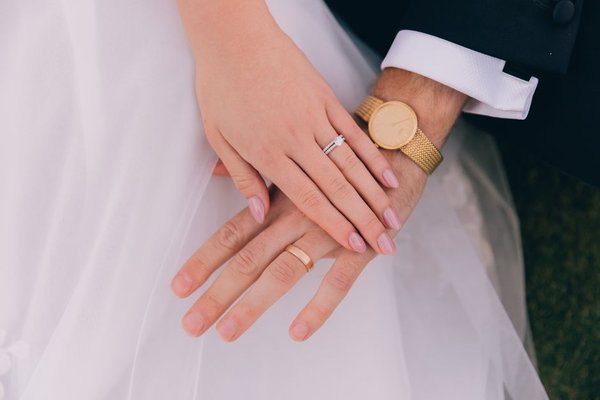
Choosing between a white gold and yellow gold engagement ring is less about finding a universally “better” metal and more about deciding which look, upkeep, and diamond presentation suit you best. Both are real gold alloys and both can suit everyday wear. The biggest differences are color, surface finish, and how each metal interacts visually with the center stone.
If you are torn between the two, compare how each looks on your hand, frames the diamond, fits your maintenance preferences, and works with any metal sensitivities.
White Gold vs Yellow Gold: The Main Visual Difference
Yellow gold keeps the warm, familiar color most people associate with gold. It is made by mixing pure gold with metals such as silver, copper, and zinc to improve strength. The result feels classic, rich, and visually warmer than a white metal.
White gold also starts with gold, but it is alloyed with white-colored metals such as nickel or palladium. Most white gold engagement rings are finished with rhodium plating, which creates the crisp, reflective white surface shoppers usually see in jewelry stores.
That gold color comparison changes a ring immediately. Yellow gold emphasizes warmth and tradition, while white gold creates a cooler, cleaner frame.
Which Metal Makes a Diamond Look Better?
For a colorless or near-colorless diamond, white gold can be appealing because the bright setting gives the stone a neutral-looking frame. White prongs can also make the setting visually recede.
A yellow gold engagement ring produces a different effect. The warm band creates stronger contrast against a bright diamond, which many people find elegant. Yellow gold can also work attractively with diamonds that show some warmth because the metal and stone may appear more harmonious together.
A practical middle ground is a two-tone setting: a yellow gold shank with white gold prongs or a white metal head. This keeps the warm appearance of yellow gold on the finger while giving the diamond a bright, neutral frame. When shopping, compare diamond color grades in the actual metal rather than relying only on loose-stone photos.
Maintenance: Yellow Gold Is Simpler
This is one of the clearest differences. Yellow gold does not depend on a white surface coating to maintain its natural color. It can scratch, dull, and need professional polishing over time, but there is no plating layer that must be renewed simply to keep the metal yellow.
A white gold engagement ring usually needs more upkeep because rhodium plating gradually wears with normal use. As it thins, the underlying white gold may look slightly warmer or less uniformly bright. How quickly this happens varies with wear, ring design, skin chemistry, and daily habits, so there is no single replating schedule for everyone.
If you want a bright white ring but strongly dislike periodic maintenance, compare white gold with platinum before buying. If you prefer gold, occasional rhodium plating is simply part of owning many white gold designs.
Durability Depends More on Karat and Alloy Than Color
It is easy to assume white gold is always stronger than yellow gold, but the reality is more nuanced. Pure 24K gold is too soft for most engagement-ring use, so it is alloyed with other metals. A 14K ring contains about 58.3% gold, while an 18K ring contains 75% gold. In general, 14K formulations tend to resist everyday wear better than higher-gold-content 18K versions, although exact hardness depends on the alloy recipe and manufacturing process.
Instead of choosing by color alone, ask about karat, setting construction, prong thickness, and recommended servicing. Comparing 14K vs 18K gold is often more useful for durability than assuming one gold color will always outperform the other.
Which Gold Color Works Best With Your Skin Tone?
Traditional styling advice often pairs yellow gold with warm undertones and white gold with cool undertones. That can be a starting point, but it is not a rule. Your everyday jewelry, wardrobe colors, watch metal, and personal preference usually matter more than a skin-tone formula.
Try both metals on the same hand under natural daylight. Do not compare one ring in warm showroom lighting and another under cool LEDs. Look at the whole hand rather than staring only at the ring. The better choice is often the one that naturally fits the jewelry you already wear.
Cost: Purchase Price and Long-Term Upkeep
When two rings have the same karat, similar weight, and comparable craftsmanship, the price difference between white and yellow gold may be modest. Retail pricing depends on gold content, labor, brand, setting complexity, and stones, so color alone does not determine which ring is cheaper.
White gold can carry an additional long-term maintenance cost because of rhodium replating. Yellow gold avoids that specific expense. If you are comparing rings at the same budget, consider lifetime care as well as the purchase price.
How to Choose Between White Gold and Yellow Gold
Choose white gold if you prefer a bright, cool-toned appearance, want the metal to blend visually with a colorless diamond, and do not mind occasional replating. Choose yellow gold if you love a warm classic look, want simpler color maintenance, or prefer stronger contrast between the band and a bright diamond.
For a real-world example, imagine two people choosing the same round diamond. One wears mostly silver-toned watches and minimalist jewelry, so white gold fits naturally into everyday style. The other wears warm gold jewelry and wants a ring that still looks intentionally golden after years of wear, making yellow gold the easier choice. Neither is more correct; the better ring is the one that fits the wearer’s habits.
FAQ
Does white gold turn yellow over time?
White gold does not literally transform into yellow gold, but its rhodium plating can wear down and reveal the warmer tone of the underlying alloy. Replating restores the bright white finish.
Is yellow gold more durable than white gold?
Not automatically. Durability depends heavily on karat, alloy composition, ring construction, and wear. Comparing the same karat and setting quality gives a more useful answer than comparing metal color alone.
Is white gold better for a colorless diamond?
White gold is popular with colorless and near-colorless diamonds because its neutral white appearance does not add obvious warmth around the stone. Yellow gold can still look excellent, especially when white prongs are used around the diamond.
Which is better for sensitive skin?
It depends on the alloy. Some white gold contains nickel, a common contact allergen, while other white gold uses palladium-based alloys. Yellow gold can also contain metals that irritate some people. If sensitivity is a concern, ask the jeweler for the exact alloy composition.
Final Choice
The white gold vs yellow gold engagement ring decision comes down to appearance and ownership experience. White gold gives you a bright, modern look and a neutral frame for diamonds, but usually comes with rhodium-plating maintenance. Yellow gold offers unmistakable warmth, a classic feel, and simpler color maintenance. Compare both in the same karat, try them in natural light, and picture how each will look beside the jewelry you wear most often. The metal that still feels right after that comparison is usually the better long-term choice.