
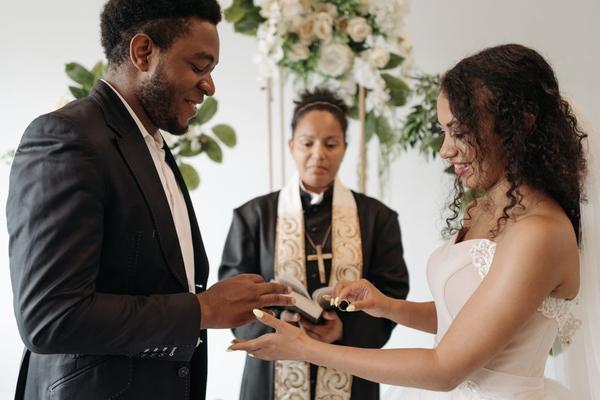
Wedding officiant cost can be surprisingly hard to compare. One quote may cover a brief ceremony and the required paperwork, while another includes interviews, a personalized script, and rehearsal attendance. Both might be reasonable prices, but they are not the same service. For couples planning a wedding in the United States, the useful question is not simply what an officiant charges. It is what that fee actually buys.
How Much Does a Wedding Officiant Cost in the USA?
As a national starting point, WeddingWire reports an average officiant cost of about $300, with many couples spending $200 to $450. The Knot’s wedding research reports an average of approximately $260. These are different datasets, not competing fixed rates, and neither predicts a specific local quote.
A short civil ceremony may cost less, especially when performed by a government official. An experienced independent officiant offering a fully personalized service may charge $500 or more. Geography, travel, religious arrangements, and ceremony details matter more than any single national average.
For an initial budget, $200 to $450 is a useful benchmark for many professional ceremonies, with extra room for add-ons. Research local officiant fees before committing to that number.
What Is Usually Included in Officiant Pricing?
The ceremony itself may last only 15 to 30 minutes, but the work behind it often takes hours. A professional may discuss your preferences, draft remarks, coordinate the processional, arrive early, conduct the ceremony, and complete marriage paperwork according to local requirements.
Basic packages may include one consultation, a standard script with limited edits, local travel, and legally required signing. Higher-priced packages might include multiple meetings, your relationship story woven into the ceremony, assistance with vows, or rehearsal direction.
Do not assume marriage-license application fees are included. Couples usually obtain and pay for their own license through the appropriate government office. Ask who returns the signed document, how quickly it must be returned, and whether that service is included.
How Costs Differ by Type of Officiant
Civil or courthouse officiants
A civil ceremony led by a judge, clerk, or other authorized official can be one of the least expensive approaches. Some jurisdictions charge set government fees; others require reservations or do not offer on-site ceremonies. The marriage-license fee may be separate. Check the county or city office rather than relying on a nationwide courthouse price.
Independent professional officiants
Independent officiants commonly price services according to preparation and customization. Someone leading a straightforward elopement may quote less than someone developing an original ceremony from extensive interviews. Professional wedding officiant prices also reflect scheduling commitments and travel time.
Religious leaders
Clergy fees depend on the faith community, membership, location, and facility. Some houses of worship include officiating in a ceremony package; others request a donation or set an honorarium. Ask whether a separate facility contribution is expected and whether premarital preparation is required.
A friend or family member
Asking someone close to you to officiate can reduce costs, but it is not automatically free or legally straightforward. Rules about who can solemnize a marriage vary by state and sometimes locality. Confirm eligibility with the office issuing your license before planning around online ordination or a one-day designation.
Why Two Similar Ceremonies Can Have Different Prices
Customization is a major factor. A standard ceremony script may need only a brief consultation; writing a personal story with several revisions takes more time. Bilingual delivery, interfaith elements, special rituals, or additional coordination may also affect the quote.
Travel is another variable. An officiant may include a local radius but charge mileage, parking, lodging, or additional time for a remote venue. Peak Saturday dates and tight timelines can narrow availability. A 20-minute ceremony two hours away may cost more than a longer one nearby.
Rehearsals are worth clarifying. Some officiants attend only the wedding-day ceremony, while others offer a separately priced rehearsal or coordinate with your planner. Ask who will direct the wedding party so you do not pay twice for the same responsibility.
A Realistic Quote Comparison
Imagine a couple considering two options for an outdoor wedding. Officiant A quotes $275 for a standard script and ceremony, then adds $75 for travel and $100 for the rehearsal. Their total is $450. Officiant B quotes $425, including a customized script, local travel, and rehearsal attendance. Despite the higher starting price, B is $25 cheaper for the services this couple wants.
This is an illustrative example, not a published market rate. Compare complete packages for your actual date, venue, and expectations. If you do not need a rehearsal or custom script, A’s lower base package could still make better sense.
Questions to Ask Before Booking
Request a written breakdown rather than a headline price. Ask: How many meetings and script revisions are included? Are travel and rehearsal attendance extra? Is there a fee if the ceremony runs late? Who handles signing and returning the marriage paperwork? What happens if the officiant cannot attend?
Review the deposit, payment schedule, cancellation policy, and whether gratuity is expected. Confirm that the officiant is authorized to solemnize your marriage where the ceremony will occur. A wedding ceremony planning checklist can help organize these decisions, but the agreement should spell out the scope clearly.
How to Budget Without Overpaying
Decide what matters most: legal simplicity, a familiar religious tradition, engaging public speaking, or a story-driven ceremony. Then obtain two or three itemized quotes for the same service requirements. A fair comparison is more useful than choosing the lowest price on a profile.
Keep the marriage-license fee and potential travel expenses as separate lines in your wedding budget breakdown. Leave a small contingency for schedule changes. Consult a ceremony timeline guide before contacting officiants so the requests you send are consistent.
Frequently Asked Questions
Is $300 a normal wedding officiant fee?
Yes. Around $300 aligns with WeddingWire’s reported U.S. average, although individual quotes may be lower or much higher. Evaluate included services and local demand before deciding whether a price is fair.
Does an officiant fee include the marriage license?
Usually not. Couples generally pay the government license fee separately. Some officiants explain filing steps or return completed paperwork, but responsibilities depend on local rules and your agreement.
Do you tip a wedding officiant?
Tipping is not always expected. A religious officiant may prefer a donation to their house of worship; an independent professional may already charge an all-inclusive fee. Check the contract and local customs.
Can we save money by asking a friend to officiate?
Potentially, but first verify that the friend can legally officiate in your jurisdiction. You may still incur costs for registration, travel, or a backup professional. Legal requirements matter more than the apparent savings.
Final Thoughts
The best way to understand wedding officiant cost is to compare the full ceremony experience, not just the quote. National averages offer a starting point; your location, desired personalization, and included services determine the real total. Ask for itemized pricing, confirm legal authorization, and choose someone whose approach fits the ceremony you actually want.