
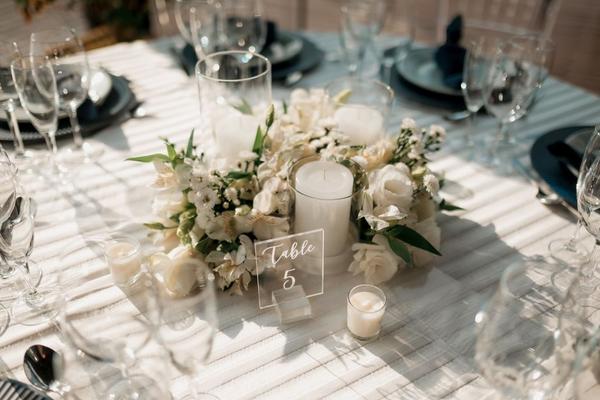
A wedding reception can look beautifully coordinated from across the room and still feel mismatched once guests sit down. That is why the smaller details matter: the plate they eat from, the napkin they unfold, the glass they reach for, and the place card that welcomes them.
The best wedding table setting ideas begin at the individual seat. Rather than treating plates, cutlery, stationery, and linens as separate shopping decisions, give them a shared visual language. The result feels considered without requiring expensive or elaborate wedding tableware.
Build the Setting Around the Guest’s Seat
Imagine looking down at one finished place setting before the centrepieces or flowers arrive. Does it already suggest the wedding’s mood? If the answer is yes, the reception will feel cohesive even when the rest of the décor is simple.
Start with the practical items your caterer will actually use. Confirm whether dinner is plated, served family-style, or offered as a buffet. A formal plated meal might need a complete preset; a buffet may work better with a single dinner plate and neatly arranged utensils. Don’t rent extra pieces merely to fill space.
Think of the setting as three layers: a foundation of linen or tabletop, a functional layer of dishes and glasses, and a personal layer of napkins, menus, and names. Give each layer a purpose rather than making every item a focal point.
Choose a Consistent Palette and Finish
A simple rule for reception table settings is to repeat two core elements throughout the room and reserve one element for variation. For instance, ivory plates and brushed silver flatware could appear at every seat, while napkins alternate between two muted colours used elsewhere in the wedding.
When developing your overall scheme, it helps to settle the wedding colour palette before ordering tabletop samples. Compare materials in daylight and under the venue’s evening lighting; a warm cream can appear starkly white next to a cool-toned linen.
Let Plates Establish the Visual Rhythm
Plates occupy the largest area of most wedding place settings, so they quietly set the tone. White or ivory dinnerware is adaptable, but a subtle rim, handmade-looking edge, or soft glaze can add personality without demanding attention.
Coordinate Flatware Without Overstyling
Silver, champagne-toned, and matte black flatware each create a different impression. Choose a finish that complements the plates and does not clash with other visible metal details. A narrow, modern silhouette works well for minimalist settings; softly rounded handles feel more traditional.
Set only the utensils required for the planned courses, with their placement agreed upon by the catering team. A photograph-perfect arrangement is no help if guests cannot tell which fork to use or servers must rearrange everything.
Keep Glassware Practical
A water glass is usually the essential piece. Add wine or other beverage glasses according to what will actually be served at the table. Consistent glass shapes lend order even when tables include different chair styles or varied flower arrangements.
If space is tight, avoid setting an entire collection of glasses at each seat. Too many stems make it difficult to reach a menu, pass a shared dish, or speak comfortably across the table.
Use Napkins and Stationery to Add Character
Wedding napkin ideas are especially useful because fabric brings colour and texture directly into the guest’s hands. A relaxed knot in washed linen suits a garden celebration; a crisp rectangle beneath a menu looks polished at a black-tie reception. Neither requires a complicated fold.
Consider how the napkin sits against the plate. Tonal contrast can be more elegant than an exact match: a dusty-blue napkin against an off-white plate, for example, reads as intentional without feeling overly coordinated.
Menus and place cards should share a clear type style and a related paper colour, but they do not need identical shapes. One distinctive detail, such as a deckled menu edge or a handwritten name, often feels more personal than several embellishments competing for attention.
Choose lettering guests can read easily in low light. If a menu lists dietary information, confirm its wording with the caterer, and avoid using a decorative card as a substitute for the venue’s allergy procedures. A separate guide to wedding place card ideas can help you refine the stationery without overloading the setting.
Three Ways to Make the Look Feel Intentional
Modern City Reception
Pair plain white plates with slim stainless-steel utensils, clear water tumblers, and charcoal napkins folded into rectangles. A single cream menu placed on each napkin adds structure. Keep the typography clean, and let repetition create the formal atmosphere.
Relaxed Garden Wedding
Try softly glazed stoneware, linen napkins in sage or oat, and small folded place cards. An imperfect-looking ceramic edge gives the setting warmth. Keep glasses clear so the layered colours remain calm rather than overly rustic.
Classic Candlelit Dinner
Use ivory dinner plates with a fine rim, polished silver flatware, clear stemware, and a folded fabric napkin. Printed menus in the same warm-white family finish the look. The effect comes from proportion and finish, not from adding more objects.
Test One Complete Place Setting Before Ordering
A sample setup can prevent costly surprises. Place a dinner plate, the actual utensils, glasses, folded napkin, menu, and name card on a piece of linen matching the rental colour. Measure the space each setting occupies, then check it against the venue’s table size and seating plan.
For example, a long banquet table planned for eight guests may look spacious in an empty room but become crowded once water glasses, side plates, and shared serving dishes are included. Test the layout with those practical items in place, not just the decorative pieces.
If you are mapping the rest of the room, a separate reception table layout guide can help you account for serving space and guest movement without confusing those decisions with the styling of each seat.
Frequently Asked Questions
Do wedding table settings need chargers?
No. Chargers add a decorative base but are optional. Well-chosen dinner plates, flatware, and napkins can look complete without them, especially when venue service or budget makes chargers impractical.
Should napkins match tablecloths exactly?
Not necessarily. Related undertones matter more than an exact colour match. A slightly deeper napkin creates depth against a neutral cloth while still keeping the overall reception calm.
How many glasses should be at each place setting?
Set glasses according to the drinks being served and the available tabletop space. Begin with water service, then confirm any additional glassware with the catering or bar team.
Can wedding tableware be mixed and matched?
Yes, provided something repeats across the settings. Keep the same cutlery finish, plate colour family, or glass shape so a mix of textures looks deliberate rather than accidental.
A Cohesive Reception Starts with Small Decisions
You do not need extravagant pieces to create memorable wedding place settings. Choose items that suit the meal, repeat a few finishes, and let one personal detail stand out. When the plate, glass, napkin, and name card work together, each guest’s seat becomes a thoughtful part of the celebration.