
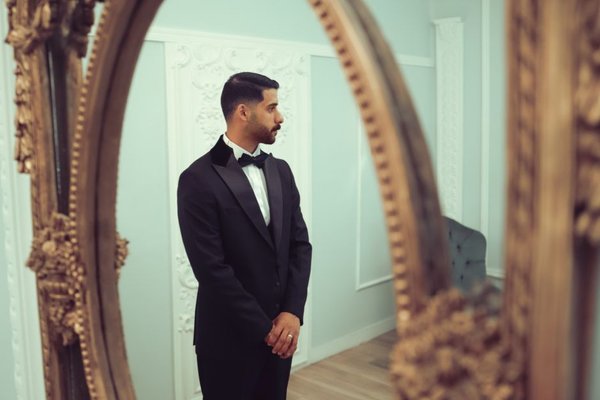
A groom tuxedo should feel special without distracting from the wedding itself. The best choice starts with the dress code and venue, then comes down to a jacket that fits properly, trousers that hang cleanly, and a few well-chosen details. A classic black tuxedo is hard to beat, but midnight blue, different lapels, and subtle accessories leave room for personality.
First, Decide Whether the Wedding Calls for a Tuxedo
A tuxedo is formal eveningwear, not simply a dark suit with a bow tie. Traditional versions have satin or grosgrain facings on the lapels and matching trim down the trouser seams. This contrast distinguishes a wedding tuxedo from ordinary suiting.
For a black-tie reception, evening ceremony, or formal ballroom wedding, a tuxedo is the natural choice. A daytime garden ceremony with a relaxed dress code may suit a tailored wedding suit better. If the invitation says black tie optional, a tuxedo is welcome, but a formal dark suit may also be appropriate.
Consider the venue, time of day, season, and your partner’s outfit. Our groom suit vs tuxedo guide offers a closer comparison when both options seem plausible.
Choose the Lapel That Suits the Occasion
Peak lapels: sharp and traditional
Peak lapels point upward toward the shoulders, creating a strong line. They’re reliable for a black tie groom who wants a distinctly formal look. They also work well on double-breasted jackets, although single-breasted designs are easier for many first-time tuxedo wearers.
Shawl collars: smooth and understated
A shawl collar curves continuously around the neck and down the jacket front. It has a softer appearance, especially in black satin. Both are classic tuxedo styles for men; choosing between them is largely personal preference.
Notch lapels appear on contemporary tuxedos, but borrow from everyday suiting. For traditional black tie, peak or shawl lapels are the safer choices.
Pick a Color That Works in the Venue’s Lighting
Black is timeless, versatile, and easy to coordinate. Midnight blue is also established in classic evening dress and can look especially rich under artificial light. Choose matching jacket and trousers rather than mixing slightly different dark fabrics.
Ivory or white dinner jackets can work at warm-weather or resort evening weddings if the dress code allows. Wear one with black tuxedo trousers for a traditional look. Burgundy, emerald, and velvet jackets make more of a statement and suit celebrations with a flexible formal dress code.
Get the Fit Right Before Adding Accessories
Even expensive groom formalwear can look awkward when the proportions are wrong. Start with the shoulders: the seam should sit close to the natural shoulder without collapsing or extending far beyond it. With the jacket fastened, its front should lie smoothly instead of pulling into an X-shaped crease.
The shirt collar should sit comfortably against the neck, with a little cuff visible beneath the jacket sleeves. You should be able to lift your arms, sit, and hug guests comfortably. Trousers should stay at the intended waist height and fall neatly over the shoes without bunching.
Try the complete outfit, not just the jacket. If your ceremony includes kneeling or sitting for a long service, test those movements during the fitting. A tuxedo that looks good standing still but feels uncomfortable at dinner is not ready for your wedding.
Allow time for hemming and sleeve adjustments. A tailor can refine these details, but major shoulder problems usually call for another jacket size or cut.
Build the Outfit Around the Right Shirt and Trousers
A crisp white formal shirt is the traditional partner to a black or midnight-blue tuxedo. A pleated front or textured piqué bib feels dressy, while a clean-front formal shirt is simpler. A turn-down collar is versatile; a wing collar can also work with an appropriate formal shirt.
Classic tuxedo trousers have a matching satin or grosgrain side stripe. They’re usually worn without a belt, using side adjusters or braces where needed. With a single-breasted jacket, a black cummerbund or low-cut formal waistcoat can finish the waist. A double-breasted jacket generally covers it on its own.
Finish With Shoes and Accessories That Make Sense
For traditional black tie, choose a black bow tie and polished black dress shoes. Patent leather is classic, but well-polished Oxfords work too. Brown shoes and casual footwear tend to undermine the formality.
Accessories should support the outfit, not compete with it. A white pocket square adds contrast; subtle cufflinks and shirt studs lend polish when the shirt is designed for them. A boutonniere can complement the wedding flowers without overwhelming the lapel.
Keep visible metal finishes reasonably consistent. The goal is to look considered rather than overloaded.
Coordinate With Groomsmen Without Dressing Identically
The groom can choose peak lapels while groomsmen wear shawl collars, or midnight blue while they wear black. A distinctive boutonniere offers another quiet difference. Avoid mismatched levels of formality: if the groom wears black tie, the wedding party should still look cohesive.
A groomsmen attire guide can help settle shared details such as shirt color, shoe finish, and alterations before everyone orders clothing.
Buy or Rent With Time for a Proper Fitting
Buying makes sense if you expect more formal events and want control over tailoring. Renting may cost less for a one-time occasion, but check what the package includes. Shirts, shoes, and accessories may be separate.
Begin shopping well ahead of the wedding and schedule a final fitting after selecting your shirt and shoes. Ask rental providers about size changes and return deadlines. Keep a day-of checklist for the bow tie, studs, cufflinks, and shoes.
Frequently Asked Questions
Does the groom have to wear black?
No. Midnight blue is a traditional alternative, and other dinner-jacket colors can suit less strict celebrations. For conventional black tie, black or midnight blue is most dependable.
Should a groom wear a bow tie or necktie with a tuxedo?
A black bow tie is traditional and best matches a classic tuxedo. A necktie creates a more contemporary, less formal effect, so follow the wedding’s dress code.
Can the groom wear the same tuxedo as the groomsmen?
Absolutely. Good fit and a coordinated party matter more than contrast. The groom can stand out through flowers or accessories if desired.
How should a groom’s tuxedo fit?
Look for clean shoulders, a smooth jacket front, visible shirt cuff, and trousers without excessive bunching. Comfort when sitting and moving matters as much as photographs.
Choose the Tuxedo You Can Wear Confidently
Start with the dress code, choose a classic lapel and appropriate color, and pay particular attention to fit. Once the shirt, trousers, shoes, and accessories work together, the outfit should feel effortless. The right groom tuxedo lets you enjoy the ceremony, photographs, and last dance without thinking about your clothes.