
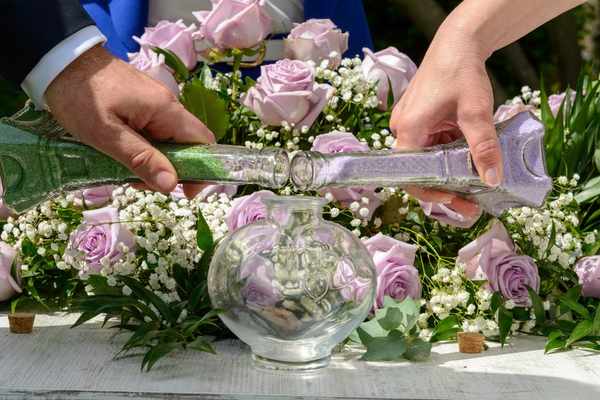
A sand ceremony wedding turns a simple act of pouring into a visible promise. Two people bring separate colors of sand to one vessel, creating a pattern that represents their lives coming together. Guests can watch the symbolism unfold, and the couple takes home a keepsake. Yet the practical details matter: choosing a vessel, planning the pouring order, and selecting the right words makes the moment feel personal rather than awkward.
What Does a Wedding Sand Ceremony Symbolize?
In a unity sand ceremony, each color represents an individual and the experiences they bring into marriage. Once the sand is combined, different colors remain visible within one arrangement. It is an appealing picture of partnership: sharing a future does not require losing separate identities.
Some couples choose shades that suit their wedding decor; others select colors inspired by meaningful places or memories. Sand colors have no universally assigned meanings, so explain yours if they tell a story. The ceremony is symbolic rather than a legal marriage requirement, and it can be secular or religious.
What You Need for a Sand Ceremony Wedding
Choose the right containers
Prepare one clear central vessel, a smaller pouring container for each person, and clean, dry sand. Look for a generous opening, especially if children will participate. A decorative bottle with a narrow neck may seem elegant but can slow the pour and increase spills.
For a keepsake, choose a vessel with a secure lid or stopper. Calculate the sand quantity by testing the vessel’s capacity, leaving space at the top for its closure. Use contrasting colors if you want guests to see distinct layers. A little spare sand is useful for rehearsal.
Set up a stable ceremony table
Place the central container on a level, sturdy surface where participants can reach it without stretching. A tray underneath makes accidental spills easier to manage. Check the approach if anyone will wear a long train, flowing sleeves, or a veil. Give the photographer a clear view without blocking guests.
For outdoor weddings, keep sand covered until the ritual starts. Wind can blow loose grains away, while moisture can cause clumping. If the vessel opening is particularly narrow, test a clean funnel in advance.
Practice the final pattern
Try pouring with spare sand in containers of similar size. Alternating the colors usually creates more defined bands; pouring simultaneously creates a softer blend. Neither method is inherently more meaningful. Choose the pattern you like, and agree on the sequence before the ceremony.
When Should the Sand Ceremony Happen?
A wedding sand ceremony often takes place after the vows and ring exchange, before the final blessing or pronouncement. The symbolic action then reinforces the commitments the couple has just made. It can happen elsewhere in the service if that flows better.
Allow roughly two to four minutes for a simple ritual, and more when several children or relatives are participating. Tell your officiant and coordinator who will set up the table, introduce the ritual, and remove the finished vessel. A wedding ceremony order guide can help you place this alongside readings and other traditions.
Sand Ceremony Wording for Your Officiant
Good sand ceremony wording explains what the guests are watching without turning the moment into a speech. A brief introduction, a pause for pouring, and one closing thought are often enough. The sample scripts below can be adapted to your personalities and ceremony style.
Simple secular sand ceremony script
“These colors represent two lives, each shaped by its own memories, friendships, and hopes. As you pour them into one vessel, you begin a new chapter together. Your colors remain distinct, just as your personalities will, but they now share a home. May you make space for each other as your life together grows.”
Short wording for an intimate wedding
“Each of you brings a story to this marriage. As your sand joins, let this moment remind you to approach the years ahead with patience, kindness, and curiosity.”
The couple can also speak one sentence each before pouring. Keep longer promises in your personalized wedding vows, letting the sand ritual provide a quieter visual moment. Read the chosen wording aloud during rehearsal to check its pacing.
Making a Blended Family Sand Ceremony Meaningful
A blended family sand ceremony can acknowledge that a wedding touches the lives of children as well as adults. Give each willing child a separate color and invite them to add it to the shared vessel. For example, the partners can pour first, each child can contribute, and everyone can finish with a final shared layer.
Ask children privately whether they would like to pour, hold a container, read a sentence, or watch. Participation should never test their loyalty or suggest they must replace an existing family bond. Words about belonging, respect, and growing relationships are more considerate than claims that everyone must immediately feel united.
Imagine two partners marrying with a younger child and a teenager. They might prepare four discreetly labeled containers, ask the teenager whether they want a speaking role, and let an adult help the younger child pour. Rehearsing this order prevents confusion without making the moment feel staged.
Blended-family officiant wording
“Today we celebrate this marriage and the relationships that surround it. Each color belongs to someone with a unique history and a valued place in this family. As these colors come together, may this home become a place where everyone is heard, supported, and free to be themselves.”
How to Protect Your Sand Keepsake
Ask a trusted person to look after the finished vessel immediately after the ceremony. Close it securely, carry it upright, and cushion it during transport. Even with careful handling, sharply defined layers can shift. The mixed colors are part of the story, not necessarily a mistake.
Do not pour water or ordinary household glue into the display to freeze the pattern; moisture and unsuitable adhesives may change its appearance. If permanent fixing matters, ask the vessel maker about compatible options before the wedding. Display the keepsake away from busy edges and curious hands.
If sand does not feel like your style, explore unity ceremony alternatives before deciding which symbolic gesture feels right.
Frequently Asked Questions
How many sand colors do we need?
Two are enough for a couple. Add more for participating children or loved ones, provided the central vessel has room.
Can we use sand collected from a beach?
Yes, wherever collecting it is permitted. Dry it thoroughly and remove debris. Test natural shades first, as they may not form clearly contrasting layers.
Who pours the sand first?
There is no fixed order. Partners may alternate or pour together. Families can decide on a sequence that makes everyone comfortable.
Does a unity sand ceremony work outdoors?
Yes. Unlike a unity candle, it needs no flame, but wind and damp weather can still interfere. Use covered containers and a sheltered table.
Keep the Meaning, Simplify the Moment
The strongest sand ceremony wedding moments are rarely complicated. Choose a vessel that works, use language that reflects your relationship, and involve family members thoughtfully. With a little planning, separate colors becoming one arrangement can say everything you intended.