
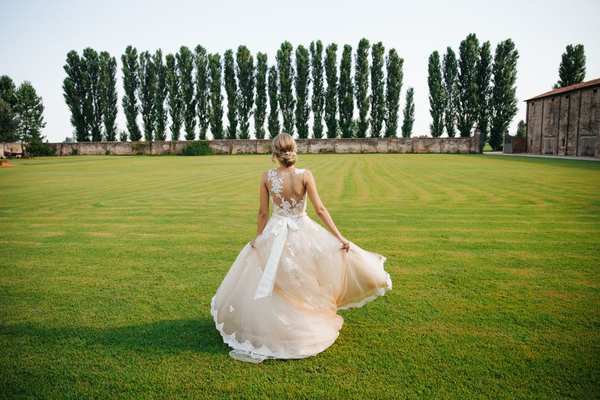
Choosing between an A-line and a ball gown wedding dress often comes down to one question: how much shape and drama do you want the skirt to create? Both are bridal classics, but they differ in how they leave the waist, how much volume they carry, and how they behave when you walk, sit, dance, and move through your venue.
An A-line wedding dress gradually widens from the waist or upper hip, creating the clean outline of the letter A. A ball gown wedding dress usually has a more defined waist and a much fuller skirt, often supported by layers of fabric, tulle, petticoats, or structured underskirts. Understanding that distinction can make a bridal appointment much more focused.
The Main Shape Difference
The clearest difference in an A-line vs ball gown wedding dress comparison is skirt volume. A-line gowns skim outward rather than expanding sharply. They can be soft in chiffon or organza, crisp in mikado, or romantic in tulle, but the overall bridal gown shape stays relatively streamlined.
Ball gowns create a stronger contrast between bodice and skirt. The waist looks more defined because the skirt expands dramatically below it. That transition gives the silhouette its regal, storybook appearance and makes it especially effective when you want the dress itself to make a grand visual statement.
How the Waistline Changes the Look
A-line dresses usually create a long, continuous line from bodice to hem, so the outfit feels balanced rather than sharply divided into top and bottom. Ball gowns tend to emphasize the waist more strongly. Fitted bodices, corsetry, belts, seams, or basque-waist details can make that definition even more noticeable.
If waist definition matters to you, compare both shapes in dresses that actually fit through the bodice. Bridal sizing varies widely, so the number on the tag is less useful than seeing how the waist, seams, and skirt sit on your own proportions.
Movement, Sitting, and Dancing
An A-line wedding dress is usually easier to move in because there is less fabric around the legs and often less structure beneath the skirt. That can suit outdoor ceremonies, destination weddings, smaller reception rooms, or couples planning a lot of dancing.
A ball gown is still completely wearable, but the extra skirt requires more spatial awareness. You may need to gather fabric when sitting and allow more room when turning. A bustle can manage a long train at the reception, but it does not remove the width of the skirt itself.
During your fitting, do more than stand on the platform. Walk several steps, sit in a chair, turn around, lift your arms, and imitate a few dance movements. A gown can look perfect in a mirror and feel very different once you start moving naturally.
Which Silhouette Works Better for Different Venues?
A ball gown can look striking in a cathedral, ballroom, historic estate, or large hotel where the skirt has room to spread. The volume becomes part of the setting instead of something you constantly need to manage.
A-line dresses are especially versatile. They work comfortably in gardens, beaches, restaurants, vineyards, barns, hotels, and formal indoor venues. Their smaller footprint can also make narrow aisles, compact dressing rooms, and crowded reception layouts easier to navigate.
Fabric Can Change the Experience
Silhouette alone does not tell you how heavy or dramatic a dress will feel. A soft tulle ball gown can feel lighter than a heavily beaded A-line dress. Likewise, a structured satin or mikado A-line can look more architectural than a floating organza ball gown.
If you love volume but worry about weight, ask about lightweight tulle, organza, or removable underskirts. If you prefer A-line but want stronger presence, look for fabrics with body, larger-scale lace, dimensional appliqués, or a fuller train.
Before an appointment, a wedding dress silhouette guide and a wedding dress fabrics guide are useful internal references because they help separate shape from material. Two gowns with the same basic cut can feel completely different when their fabric and internal construction change.
A Practical Fitting Test
Imagine a bride choosing between two dresses for a formal hotel wedding. The A-line feels easy and leaves plenty of room for walking and dancing. The ball gown creates the ceremony look she has pictured for years. Instead of deciding from mirror photos alone, she tries both with similar heel height, sits for several minutes, walks through a narrow doorway, and practices turning with a partner. That test may show that the ball gown is easier than expected, or that the A-line gives her the confidence she thought only a fuller skirt could provide.
Use the same approach at your appointment. Comfort should be tested, not assumed. If bodice structure is also part of your decision, a wedding dress corset and bodice support guide is another natural internal reference to review.
Who Should Choose an A-Line Wedding Dress?
Choose A-line if you want a classic bridal shape with moderate volume, easier movement, and wide venue flexibility. It is also a strong option if you like a fitted bodice but do not want a dramatic change in width at the waist.
Who Should Choose a Ball Gown Wedding Dress?
Choose a ball gown if you want maximum skirt presence, strong waist emphasis, and a more formal or theatrical bridal effect. It works best for brides who genuinely enjoy volume rather than simply feeling that a wedding dress is supposed to be large.
FAQ
Is an A-line dress less formal than a ball gown?
No. A-line dresses can be extremely formal depending on fabric, embellishment, train, construction, and styling. Ball gowns naturally look grand because of their volume, but formality is not determined by silhouette alone.
Which is easier to walk in, A-line or ball gown?
A-line is usually easier because it has less skirt volume and often less internal structure. A well-fitted ball gown can still be comfortable when the hem length, underskirt, train, and bustle are handled correctly.
Can a ball gown be lightweight?
Yes. Layers of lightweight tulle or organza can create substantial volume without the same weight as heavily embellished fabrics. Compare different skirt constructions rather than judging weight from shape alone.
Should I try both silhouettes at my appointment?
Yes. Trying one well-fitted example of each gives you a direct comparison of waist definition, movement, scale, and comfort on your own body.
Choosing Between the Two
A-line creates a gradual, versatile shape with easier movement, while a ball gown creates a more defined waist and significantly fuller skirt. Fabric, construction, train length, and venue can amplify or soften those differences.
Try both with the same practical standards: walk, sit, turn, dance, and look at yourself from several angles. The right silhouette should work in motion as well as in photos. When the dress supports both the atmosphere you want and the way you plan to spend the day, the decision becomes much easier.